Table of Contents
Unhappy in Marriage ?
Life in a non-existent or unsatisfying marriage can only be described as an emotional war zone. Daily life is a battle; every day, it is different, by silence, sometimes by word. When a union between husband and wife is not full of Love, esteem, and encouragement, but anger, stress, and apathy, it is not an unhappy marriage but a toxic relationship. A life in such a bondage entails the loss of a bit of your identity each day, the stifling of your feelings and abandonment of your dreams.
Emotional abuse, manipulation, disrespect and failed communication become the norm within a toxic marriage. You feel lonely, unattended and unseen in your suffering. This is not the emotional pain; it is the pain that takes toll on your mental health, your self-worth and even your physical health.
However, the question is: Do you have to live with this pain? Or are you able to get out of this vicious circle? In this guide, we will discuss a toxic relationship, how to survive in it, and how to get out of it when necessary. You should have a relationship that is respectful, loving and secure in emotions.
What Is a Toxic Marriage ?
A toxic marriage involves a relationship in which the union between the spouses is full of consistent tension, disrespect, and uncooperative attitudes rather than Love and support. This type of relationship harms you emotionally and mentally. Major indicators are:
– toxic negativity:
When all the discussions become a quarrel, even a small problem can develop into significant stress. All interactions are full of hostility, as if you have turned into enemies. Every day closes with emotional exhaustion, and confusion is increasing, rather than a solution.
– Trustlessness:
You cannot trust your partner and must always explain yourself. We still have suspicions even when there is transparency. There is a loss of emotional safety, and you are always defensive.
Insults:
When one of the partners degrades the other, addresses them with humiliating words, or engages in verbal abuse. This behaviour does not remain in the words only- it disintegrates your self-esteem. It makes you feel disrespected in the relationship. This is a very destructive kind of emotional abuse.
-dominate person:
When one partner attempts to take over the choice of the other, either in the field of clothes, friends or even profession, all spheres of your life are controlled. You feel that you have lost control over your own decisions.

The Way a Happy Marriage Becomes Toxic Marriage
Most of the time, a relationship does not turn sour immediately. It is a gradual process in which Love and trust are peacefully substituted with tension and misunderstanding. It begins with the dismissal of minor problems, after which communication deteriorates. At some point, the feeling of disrespect and control starts to infiltrate. A relationship that used to be joyous gradually turns out to be painful. The following are some of the steps that can make a healthy bond toxic:
– Communication Gap:
In the beginning, everyone is open to everything. As time goes by, however, the partners stop communicating. Minor disagreements are piled up, and instead of doing away with them, they are swept under the carpet.
–Pressure:
Once one of the partners begins to unrealistically expect the other, there is always disappointment and emotional stress.
– Personal Space:
Failure to respect the other partner’s personal space and freedom suffocates and constrains the relationship.
-Disregard:
When one of the partners begins to ridicule the other, disregarding their feelings or diminishing their preferences, it is the beginning of disrespect, which is often the first step towards toxicity.
How Do You Know If Your Relationship Is Toxic
Realising your bad relationship may be hard, as others normalise such behaviour. The pain is usually emotional and becomes habitual to the extent that it is difficult to detect. These are some of the questions you can pose to yourself:
- Are you afraid or nervous about speaking with your partner?
You lack emotional safety when you always fear something will go wrong in a conversation or when you need to pick your words. Communication in a good relationship is not threatening, but comforting.
- Do you feel that you should always make them happy, even at the expense of your happiness?
It is not a healthy sacrifice when you neglect your needs, feelings, and priorities to avoid offending the other person. Your happiness is as important as theirs.
- Do you always feel guilty even when you do not deserve it?
It may be emotional manipulation if you are always the one to blame, and your partner never accepts responsibility for their actions. You feel unworthy because of the constant feelings of guilt.
- Do you feel your partner is not listening to you and cares about your feelings?
Emotional disconnect is when your emotions are ignored or considered an overreaction. Each individual should be listened to and their feelings taken into consideration.

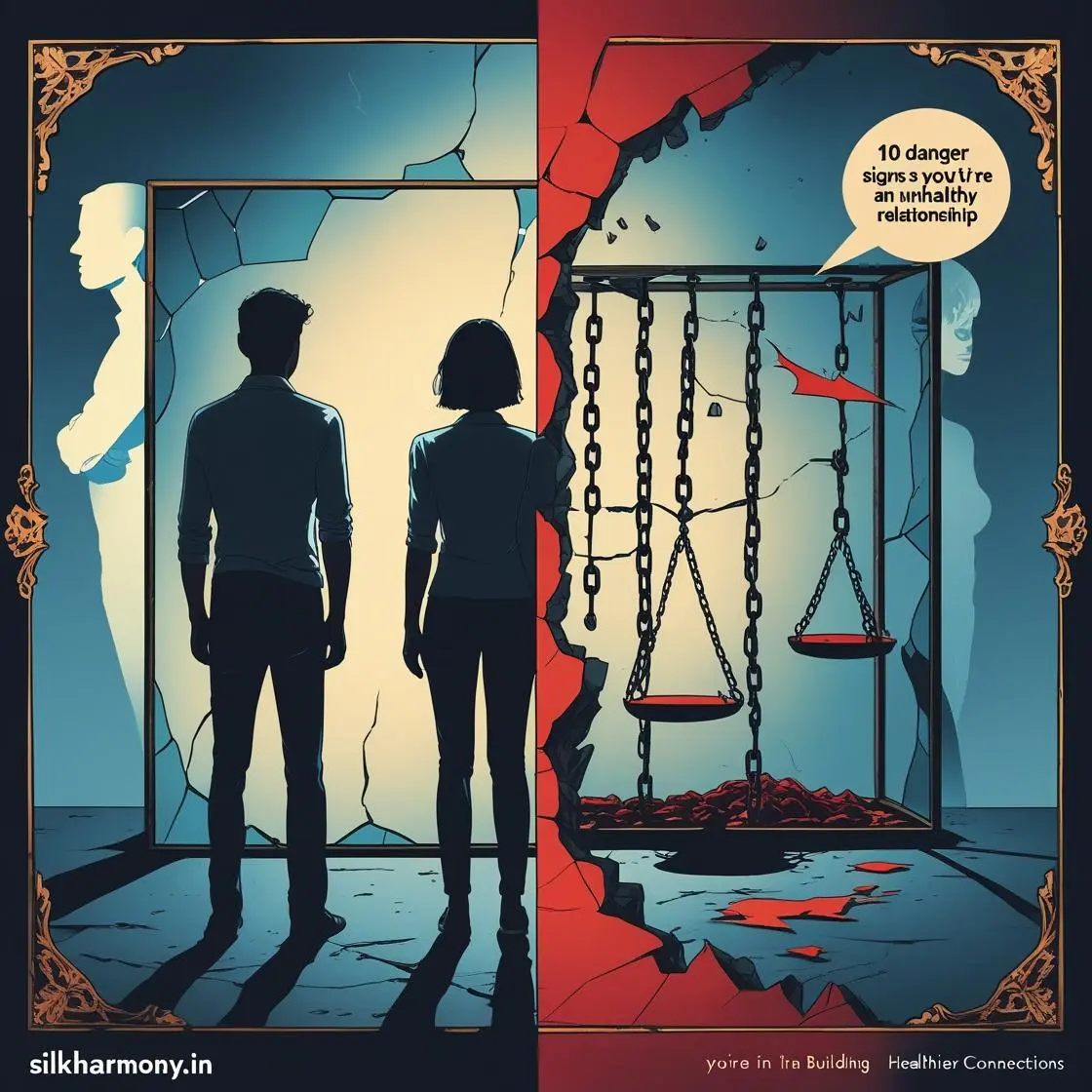
10 Signs of an Unhealthy Relationship
- 1. Emotional block: Lack of respect among couples, when one regularly devalues the other partner in the eyes of others or when the partner does it behind the back, replaces dignity with humiliation. This is against self-respect, and Distance becomes emotionally mature.
- 2. Confidence collapse: The emotional abuse can be revealed by the second partner criticising the first partner all the time. There is a gap between constructive feedback and destructive criticism; we should learn the difference.
- 3. Power Imbalance: In cases where one partner and the other partner make all the decisions, the other partner feels weak, and equality is lost in the relationship. The voices in a healthy relationship count.
- 4. Emotional Blackmail: It is emotional manipulation when one partner takes advantage of using blame, guilt, or anger to have their way. You cease to make free decisions, and you live under emotional pressure.
- 5. Loyalty conflict: Personal boundaries are also violated when a partner introduces family, friends or outsiders to the relationship. A relationship is between two individuals, and all the problems should be solved within that relationship.
- 6. Conditional love: Emotional dishonesty is when one of the partners shows their Love to others only to be noticed. In contrast, they are rude, cold, or indifferent. There is no actual connection to such Love- it is an act.
- 7. Loss of intimacy: Once the communication is less, there is less emotional contact. Both of you feel distant from each other, and tension starts accumulating. There is nothing worse than silence at times.
- 8. Emotional bypassing: Lack of accountability is when one of the partners does not accept their fault and places the blame on the other. We all make mistakes, and when we own up to them, we are mature.
- 9. Suppress : It is unhealthy dominance when your partner attempts to take over your friends, work, clothes or money. A healthy relationship does not mean that it does not involve personal freedom.
- 10. lack of emotional support: Once your emotional, physical or mental needs are never taken into consideration, the relationship is unbalanced. Your needs are no less important than those of anybody

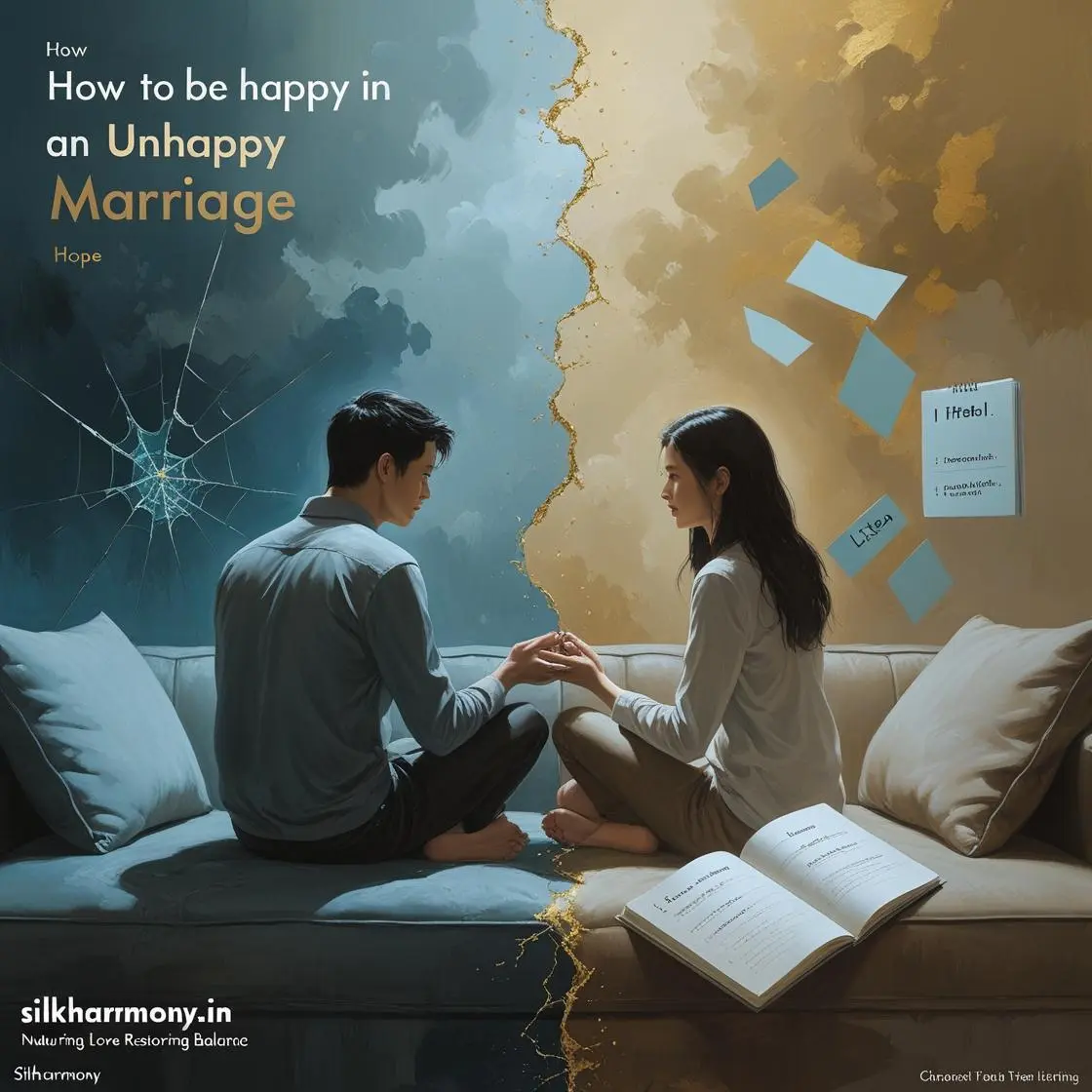
How to Be Happy in an Unhappy Marriage
These suggestions can be used if you are in a bad marriage and attempting to repair your relationship:
- Learn to know how you feel: To start with, one should understand that what you feel is legitimate. It will just harm you to deny or repress your feelings.
People say, “It must be me, I am making a big deal out of this,” or “It must be me”, but the first step to healing is accepting and recognising that you are in pain.
You should not feel ashamed of prioritising your happiness and mental peace; you need it. - Alter Your Communication: The manner of communication may be a tremendous difference in the relationship.
Talk to your partner about how you feel rather than accusing them. Accusing your partner of always doing something is a way to end a conversation, whereas saying that you feel hurt when this happens will give them a chance to see what you mean.
Words are not the only thing that counts; tone and timing are also important. - – Get Professional Assistance: In other cases, both partners desire to fix the relationship but do not have the resources to do it.
Such situations should be addressed by meeting with a counsellor or a therapist.
The support of a professional gives both of you a neutral area to express yourselves and have a new view of the relationship. Therapy is not only to fix things when they are broken- it is a preventive and healing mechanism.
How to Survive in an Unhappy Marriage
Every day may seem like a fight when you are in an absent or emotionally disconnected marriage. During these times, you must ensure you do not give up; instead, you protect and become stronger.
1. self-definition:
We tend to lose our identity in complex relationships. Our hobbies, friends, and dreams that once characterised us have become things of the past. Begin to make time with yourself. Make yourself happy. Freedom is yours to take back and find your identity.
2. Emotional boundaries:
When your partner insults or talks aggressively at you, you need to take a step back at that time. That does not make you weak; it makes you a person who respects himself. Establishing limits will safeguard you against emotional damage and strengthen your self-esteem.
3. Connection anchors:
It is much different to be lonely and alone. Speak to your friends and relatives. Spend time with people that you love. Such connections will demonstrate your strength and will help you fight against loneliness.
4. Mind Your Health:
In difficult situations, one must consider taking care of one’s health. Specific yoga, meditation, or even a morning walk can give you inner strength. When you have peace of mind and peace in your body, you can be strong in difficult circumstances.
How to Get Out of a Toxic Marriage
Leaving may be a sensible and good choice if you feel that your relationship is irreparable and is constantly damaging your mental, physical, or emotional well-being.
Design a Plan:
Begin by developing an organised program without any hurry. Do it with a trusted friend, family member, counsellor, or yourself. In your plan, you may include:
- Accommodations on where to stay
- Parental rights to children’s custody and emotional support of children
- The financial resource management
- What should you do in case it is an abusive situation?
Know Your Finance:
One of the tactics of a toxic relationship is financial control. When your partner is in charge of your money, you have to quietly work towards being independent with cash:
- Open an account with a bank of your own
- Save little by little
- Look into sources of income depending on your talent
Legal Advice:
Each region has laws, such as the Hindu Marriage Act, the Muslim Personal Law, or the Special Marriage Act. Visiting a good lawyer will help you clarify your rights and how to defend yourself legally. When there is domestic violence or harassment involved, then legal protection is all the more critical.
Set up A Support Network:
You have people in and around you who know your truth- talk to them. Find support in friends, family, or a good mentor. The most common thing that many individuals think is that I must do everything by myself, but asking someone to help is not a weak thing, but rather a strong one.
A last thought:
All relationships are unique, yet everyone should be given the same things: respect, peace and emotional security. Your happiness is not a luxury; it is a basic need. You may also want me to write on such topics as “Post-Separation Healing Routine” or “How to Emotionally Support Children During Separation” in your format.
Frequently Asked Questions (FAQs)
Q1: Why do people often lose their identity in a toxic marriage, and how can they protect it?
In a toxic marriage, constant emotional abuse and disrespect can gradually erode a person’s self-worth and individuality. To protect your identity, it’s crucial to make time for yourself, revisit your hobbies, reconnect with friends and family, and set clear boundaries. These steps help you reclaim your personal space and remind you of who you are outside of the relationship.
Q2: Is divorce the only way out of a toxic marriage, or can it be saved?
Divorce isn’t always the only answer. If both partners are willing to address the issues, professional help like couples counseling can be very effective. However, if one partner is repeatedly abusive or unwilling to change, leaving the relationship might be the healthiest option for your mental and physical well-being.
Q3: 3. How can I take care of my mental and physical health while still in a toxic marriage?
Taking care of yourself is vital. You can engage in calming activities like yoga or meditation, or simply take a daily walk to find inner peace. It’s also important to build a strong support system by talking to trusted friends and family. Most importantly, don’t let go of your identity and self-respect—continue to do the things that bring you joy.
Q4: Why is financial independence so critical when leaving a toxic marriage?
Financial control is a common tactic in toxic relationships. That’s why being financially independent is a crucial step when you decide to leave. It allows you to make decisions without being dependent on your partner, giving you the freedom to secure your future. Opening your own bank account and saving money are good first steps toward this independence.