
1. Communication Skills: Building a Strong Foundation of Your Relationship
Communication in relationships and specifically in marriages is not about talking but about the understanding, emotion and linkage. It is on this that trust, intimacy and harmony flourishes. If there is effective communication there is less chance of misunderstanding and the partners are more familiar to each other.
But not every communication is natural. It takes work, repetition, and acquisition of some basic skills. How can you and your partner collaborate to improve your communication? Let us see.
The Main Things That Will Change Your Communication:
- Active Listening: This is not about listening but actually trying to understand what your partner is saying. It is being able to listen without judging, without being in a hurry to insert your own ideas and without interrupting your partner.
By listening to your partner, you will make him or her feel appreciated and understood. - Employing I Statements: When we are frustrated we are likely to use accusatory statements such as you always. or You never… Such utterances put the other individual on the defensive. Rather, employ the use of I statements which are centered on your feelings and experiences.
Instead of saying, You always come home late and make me worry, say, I feel worried when you come home late. This is a way of expressing your feeling without blaming.
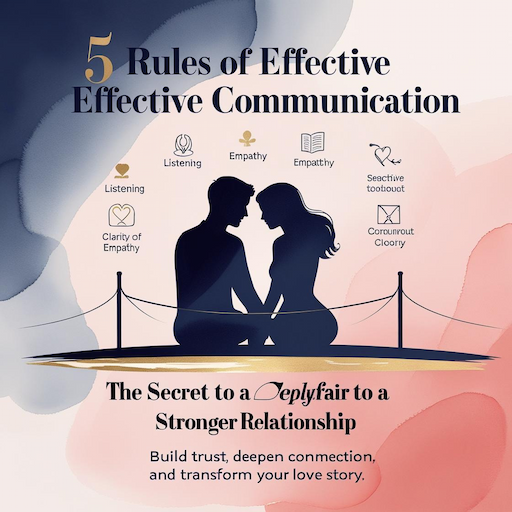
For example, when you’re talking you keep eye contact to show you care. Emotional support can be concretized in touch such as grasping hands or a hand on a shoulder. Be mindful of your non-verbal communication and ensure it backs up, your verbal message
2. Emotional Intimacy
Any good and lasting relationship is based on emotional intimacy. It’s so much more than just spending time together its making a deeper connection – a connection built on trust where two human beings feel comfortable enough with each other to be truly honest-no holding back, no faking, no pretending, just raw emotional expression with each other. It`s a safe space where you have the freedom to be yourselves with your partner.
MAIN POINT
- Quality Time
- More Than Being There: Quality time does not mean being in the same room or watching TV together. It is listening to one another with full attention. This is where you put all the external things aside, such as phones or work emails, and concentrate on your partner.
- Meaningful Connection: This may include profound and meaningful communication, where you share your experiences, feelings, and thoughts of the day. It can also be by doing something together, such as cooking, taking a walk, or learning a new hobby, the main thing is that you are connected during the process.
- The Power of Presence: It is also a time to just enjoy being together, even when you are doing nothing in particular. Even sitting together in silence, holding hands or just being together in the company of each other also enhances emotional connection. This will make your partner feel special and that you really want to be with him or her.
- Sharing Vulnerabilities
- Trust and Security: To share your vulnerabilities is a key element of emotional connection. This is what you fear, what makes you worry, your hopes, dreams and even what you are insecure about. By discussing your weaknesses with the partner, you demonstrate much trust in him or her. It might mean that you associate them with safe and non-judgmental space where you are not afraid of being rejected.
- Greater intimacy: This enables you to be intimate with your partner to a greater extent as they get to see the inner world. It makes them know who you really are and what motivates you. When your partner embraces and helps you with your weaknesses, it builds the relationship immensely.
- Mutual understanding: This is also a means of getting mutual understanding and empathy. By sharing information about your weaknesses, your partner may also feel encouraged to open up and the result is openness and being genuine in your relationship.

- Apreciation and Gratitude:
- Positive Reinforcement: Dropping a Thank-you message to your love full of gratitude and appreciation infects the relationship with positive and happy energies. It is not just the recognition of the big things, sometimes it is about recognition and appreciation of little things or gestures that they perform on a regular, daily basis that might not always get noticed.
- Feeling valued: when you appreciate the efforts made by your partner and tell them how you love them you would make them feel valued and loved. It makes them feel they are not ignored.
Emotional intimacy is a process that takes time and effort. It’s a investment that will make your relationship better and more enjoyable.
Conflict Resolution
Main Points
The key to successful conflict resolution is based on a number of important principles that promote peace and understanding:
- Give Time to Cool Down: When you are hot-blooded, it is extremely hard to make decisions or even have a discussion. It is necessary to give each other some space to cool down. This enables one to think better and to approach the situation better.
- Compromise: Conflict resolution is not supposed to be a win-lose situation, but an us-both situation. This implies that the two parties may have to compromise to find a solution that would satisfy all. It is not to find out who is right or wrong, but to seek a way that satisfies both needs.
- Apologize and Forget: Do not allow previous to takeover the present. Once an agreement has been reached, there is a need to forget past and forgive each other. This will assist you in creating better relationships in the future and avoid undesired tension.
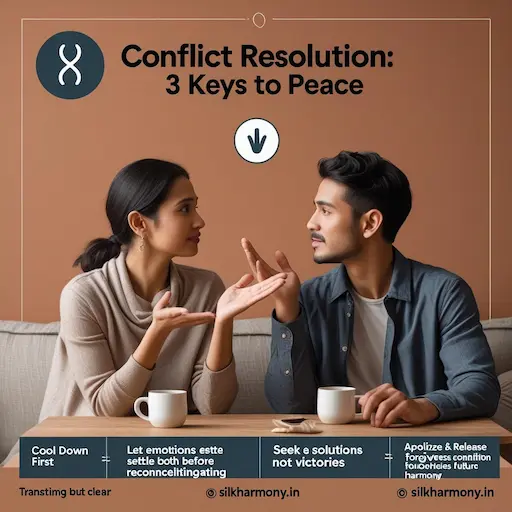
These principles will help you to deal with conflicts more efficiently and foster peace and understanding in your relations.