Table of Contents
The course of 15-20 year marriage is a worn jacket. It is known, it is secure and it is incredibly comfortable. Yet there are occasions, in this very comfort, when the excitement and the thrill that used to be present can be lost. At this point, the priority is not to correct issues in your relationship and perk it up, but to provide that profound friendship and affection with a new appearance.
Here, we share some unique ideas for couples who have spent a significant portion of their lives together.
Rediscover Each Other, A new
Marriage is not a life of survival. You have survived the storms and milestones over the years and created a life together. However, in the empty interstitial moments of duty, child-rearing, career, family life, something unseen occurs, you both evolve. Not sensationally, maybe, but in significant respects. Interests shift. Dreams evolve. Emotional needs are enriched or changed. And even so, many couples still relate with each other in terms of who they were, not who they have become.
Rediscovery is not about healing the broken–You respect the present embodiment of your mate rather than just the past that you have together. This type of curiosity may rekindle intimacy, restore emotional trust, and create open space where new forms of closeness can occur. It is not the setting of the clock–it is the setting of the clock more deliberately, more humanely, more intelligently.
So pause. Step out of routine. See your partner not as a co-parent/co-manager of life but as a person whose inner world is not yet fully formed. You do not require an emergency to re-connect. You only have to be bold enough to ask, listen and dream with each other once again.
Ask 10 New Questions
Our intimacy is a product of the kind of questions we pose. In many cases, couples get into an autopilot of conversation, discussing logistics, schedules, or superficial updates. Yet only true emotional attachment comes with questions that go to the heart. Attempt to ask questions that you have never asked previously even after decades of being together. e.g. What is the largest of your dreams now? or What hadst thou had so fixedly tried, had there been no fear? They are not questions, but they are invitations to the present emotional field of your partner.
Make it a ritual. Sit down and have a cup of tea, or a walk, and ask one new question every day in ten days. Remember to be soft, inquiring, and receptive. Avoid judgment or analysis. It is not about solving anything–the point is to know. You may find that your partner has a new creative interest, a secret fear, or a long-deferred wish that his partner has never mentioned. And in sharing they can experience being seen in a manner that has been lacking.
They can also help you to understand how the values or priorities of your partner have changed. Perhaps they need more adventure, or more peace or more purpose. When you ask, you listen, you are not only collecting information–you are reestablishing emotional closeness, one response at a time.

Listen to a New Story
All human beings have narratives that influenced them over the course of their lives- childhood, teen years, or even younger years when they were still young and something happened that left them emotionally scarred. But there are a lot of these stories which are not told in the long-term relationships. Ask your partner to tell you a memory that you have never heard. It may be of an old friendship in childhood, of an act of defiance, of an unspoken infatuation, or of a sudden victory. The point here is that there is no need to interrupt, correct or direct the conversation.
This type of narrating is not only nostalgic, but also eye-opening. You will listen to how your mate made sense of the world prior to your entering. You will see the emotional architecture that defined their reactions, fears, and strengths. And in listening you bring something hard to find: the gift of presence. You are saying, I would like to know you–not the one I married, but the entire person you always were.
In some cases, these narratives open the door to empathy. You may know the reason your partner will respond differently to conflict, or why they will attach value to some rituals. Other occasions, they just make people happy–a comic story, a quaint mannerism, a dream lost. In any case, you are expanding your emotional map of one another. And that map forms the basis of more intimate relatedness.
Dream About the Future
Couples tend to look back into the past- the way they met, all their early escapades, the difficulties they faced. These memories are great, but can at the same time, keep you within the realms of nostalgia. In order to really reconnect, move the focus forward. Question: So what would we like to be able to build in five years? And this is not just the issue of goals–this is the issue of shared vision. Do you want to travel more? Start a new project? Redesign your home? Deepen your spiritual life? The opportunities are always unlimited.
Shared dreaming generates emotional action. It makes you remember that your relationship is not a dead object–it is living, growing, and has potential. It is also the way to prioritize. Perhaps one of you desires to be stable and the other desires to be adventurous. Naming your dreams can help you to honor both. You may even find new dreams that you are both excited about–dreams you were not thinking about before.
This should be a group effort. Write a vision board or journal of the future. List items that you desire to feel, experience, and accomplish. Stop worrying about being practical–this is emotional dispassion. When couples share dreams, they do not simply plan together–they connect. They become co-owners of a tomorrow that is characterized by who they are today, as opposed to who they once were
Break Out of the Routine
Routine is a two sided sword in relationships. On the one hand it is comfortable, predictable, and feels like they are in a common rhythm. Gently on the other, it may slowly drain away enthusiasm, spontaneity, emotional inquisitiveness. With time, the couples might be acting more like partners than lovers–effective, compatible, yet dispassionate. Leaving the rut does not imply leaving the structure, it simply involves adding deliberate newness to your joint life.
Monotony usually comes in its own way. The dinner discussions, the plans of the weekend, the same patterns of emotions. But little alterations can have a ripple effect. Eating something new together revives the feeling of exploration that used to characterize your initial relationship. It is also a reminder that your relationship is not a machine but a living and breathing organism that breathes upon surprises, laughter, and your own personal growth.
Then play with going out of the rut. Not because it is something out of the ordinary to you, but because you love what you do, not autopilot. be it a pranked challenge, a two-way learning process, a night of madness with a motif, what comes out of these instances is an emotional memory trace behind them-memories something to the effect that no amount of great gesture would make one happier than the habit of making the same choices, different choices over and over again.
Plan a “Mystery Date”
Mystery dates: Mystery dates provide the gaming of predictability. Plan a surprise outing with your partner once every month. The catch? They will not have any idea where they are going to go or what they will be doing until you come. This little twist turns a common date into an adventure and brings back the anticipation and excitement most relationships lose after being in a long-term relationship.
The trick is the work and consideration. It can be a picnic with a star-filled sky, a bizarre art gallery, or a road trip through a local town that you do on the spur of the moment, but the surprisement factor will make your significant other feel special and loved. Not about splendour–about innovation and expressiveness. A new park or a local cafe with some hushpuppies can be something special when it is covered in mystery and has audit trails.
Also, mystery dates reverse the affective relationship. The planner is allowed to show love and the receiver is allowed to feel loved in a new and surprising manner. Such dates are memories that will be treasured over time–evidence that even when your lives are full of routine, you can still surprise each other. And that joy is the throb of enduring closeness.

Learn to do something with someone.
Something uniquely bonding in being beginners together. Couples get to know a new skill together: it could be pottery, salsa dancing, photography, a foreign language, and they enter a new sphere on the same level. No professional, no ranks, no master, no slave– two guys stumbling about, laughing, and maturing. This mutual weakness creates the bond in a fashion that everyday life seldom does.
Studying together generates new emotional connections as well. You start to connect your relationship to exploration, fun, and development rather than to work or duty. Not only co-managers of life you become co-adventurers. And the very process of doing it–of making mistakes, praising each other, cheering one another on–becomes a symbol of your relationship: not perfect, developing, and very, very satisfying.
Select one that interests both of you, though this may be something you are not comfortable with. The aim is not the mastery–it is the experience. It does not matter whether you trip over steps during dancing or pronounce words in a foreign language badly, you laugh and make an effort. These scenes serve to remind you that growth does not need to be serious, and it can be happy, chaotic and communal. And in that common muddiness, love is apt to attain new dimensions.
Have Themed Nights
Themed nights are an easy, but effective way to add fun and creativity into your relationship. Give each month one evening to a particular theme–something rogueish, or sentimental, or even rather stupid. You can choose 80s Night where you listen to retro music and wear neon clothes, Pizza Making Competition where you cut your own dough and the most unusual toppings and Travel night where you cook what you want to cook in the country you are going to.
Such evenings disrupt the pattern of everyday without having to do the planning. They welcome you into another state of mind, another state of energy and, in many cases, another state of yourselves. You may also find out that your partner has a secretive competitive edge, dances funnyly, or that he is a surprisingly good cook. And more to the point, you will again learn the happiness of just being able to have fun.
The themed and idea-oriented nights also produce affective rituals–a moment you anticipate, discuss and recall. They are anchors to your relationship, they remind you that connection isn’t only formed by having profound conversations and having similar objectives, but it is also created through laughing, playing, and imagination. Then choose a theme, and create the atmosphere and allow yourself to be carried away. Together because there are times when the only way to reconnect is by pretending to be someone you are not.
Research has proven in the Personality and Social Psychology Bulletin1 that when couples do something new together, they expand each other’s personalities, which increases satisfaction and excitement in their relationship.
Honor Your Shared History
It is not love that holds up your relationship–it is time. All those years you have spent together, all those problems you have gone through, all those moments you have laughed, all those moments you have spent so silent–all that is the basis of something very strong. Your collective history is not a chronology, but an active memory of relations, process, and fidelity. Once you come back to it with a purpose, you do not recollect but re-relate.
Relive Old Memories
There are occasions when stepping backwards is the strongest force of movement. Make time to go back to the material objects of your life: old photos, wedding video tapes, handwritten letters, or even saved text messages. Allow yourselves to luxuriate in those times. Discuss what you experienced at the time, what you now notice differently, and what those memories still hold with you.
It is n’t nostalgia or indeed emotional grounding, By returning to the times when you decided to fall in love. you’re reminding your mate of the love that was there each on, despite the way life came excited and complicated. These studies will revitalize the love, enhance the gratefulness, and remind you that your mate is further than who he’s right now he’s the one who has held your hand in every season of your life.
Write Your Story
Your love is something to be told–to other people, and to your own selves. Take a notebook and start writing your trip with them. Start here with how you met, go through the chapters, the ups, the downs, the turning points, the in-jokes, the silent conquests.
This is a way to make you see your love in black and white. It gives you a chance to look back on the distance you have traveled, and the extent to which you have developed, and the ways in which you have all held one another up. Co-writing can show patterns, too–when you overcame a challenging situation, or when you unexpectedly felt happy. These lessons will help reinforce your relationship and help you remember that you are not simply getting through the relationship- the relationship is developing.
Tell Your Story to Your Kids
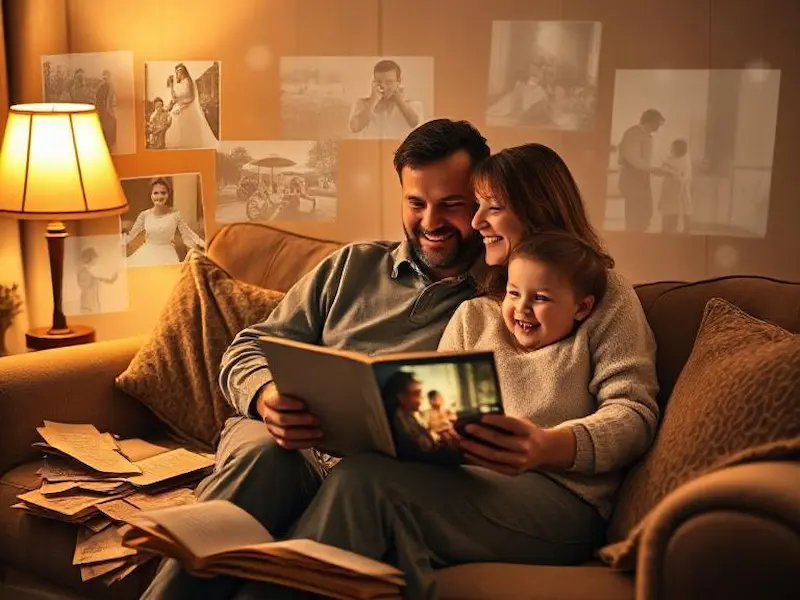
Telling your children your love story is not only a nice thing to do, but it is also an excellent legacy. Share with them how you met, fell in love and the humorous or rowdy times of your wedding. Allow them to glimpse the human dimension of your relationship, the epicure, the fragility, the effort it took to create a life together.
Emotional bridges are formed through this storytelling. From this, the children learn that how love is not always about romance but also can be about commitment, persistence and growing together. It also gives you and your partner a chance to re-live those moments together, which usually come with new eyes and new love. And when your children laugh with your stories or pose inquisitive questions, you will have a feeling of pride not only in your relationship but also the family that you have helped to build.
This is confirmed by Marshall Duke’s article “Do You Know?” 20 Questions About Family Stories2
This post directly explains how knowing and participating family stories can increase adaptability and emotional health in children and families. This principle also applies between couples, as the hubby- woman relationship is also the introductory unit of the family. When they flash back their participated stories, they reinvigorate the adaptability of their relationship.
Express Love Without Words
Love in a long-term relationship usually changes into loving statements. After a certain period of time, you start to read each other without explanation. A look, a sigh, a slight variation of tone–they are fluent phrases of feeling. It is a gift, an accumulation of years of mutual experience. But even silence can deepen. Even the unofficial can be brought to the fore.
Wordless love does not mean doing less–it means doing otherwise. It is about reminding your partner that you pay attention to them, you still care, and you still pick them in the minor details. These are the gestures which might appear to be normal but have emotional content. You hear, I see you, I am with you, you are important to me without words.
Surprise One Another with Little Surprises.
Surprises do n’t have to be expensive in order to count. Bringing home their favorite snack, leaving a note in their bag, or transferring a spur of the moment I love you communication on a busy day are moments that remind your mate that he or she’s loved.
These movements are indicative of listening. They say, I remembered, I thought of you, you are the one that I want to delight. These little gifts are emotional savings–little acts of love, which create trust and affection and happiness over time. They also maintain the relationship as playful, reminding you both that love is no a serious thing, but it is sweet, light and alive.
Help Without Being Asked
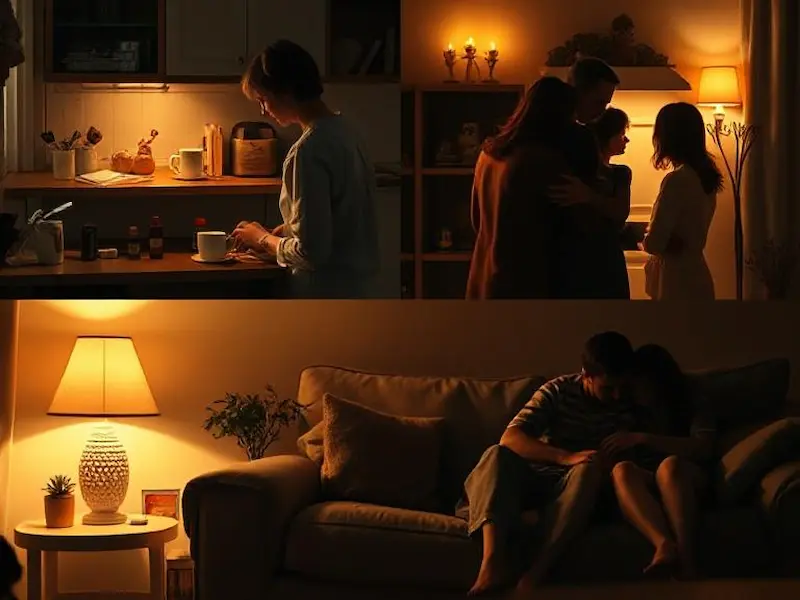
Service is one of the most influential means of expressing love–all the more so when done without taking the initiative. Preparing coffee before they get up, washing clothes without being requested to or silently doing a task they do not like- all these things tell them, “I want to keep you comfortable, I want to make your day easier, I want to take care of you.
Emotional labor is usually not recognized in long term relationships. However, when you intervene without being requested to intervene, you are not only doing service to your partner, you are also respecting their needs. You are saying, I see your endeavor, and I would like to share the burden. These signs create emotional protection. They begin to tempo with each other, and love is not only spoken, but also generously practiced in the unspoken way.
Increase Physical Touch
Touch is a language of its own. Hugging someone in the kitchen, touching the shoulder during a conversation, sitting together when watching TV–all these physical touch points are restorative. They also remind your partner that you are there, that you are attentive, and that you are emotional.
Later, physical touch may die–not through lack of attention, but through habit. Intimacy can be rekindled by reintroducing it on purpose. It does not need to be lovey-dovey or melodramatic. A touch on the arm as one passes by can say, I am with you. These movements regulate emotional closeness, relieve tension, and reinforce the relationship which words cannot sometimes express..
According to the research paper “The Role of Nonverbal Communication in Interpersonal Relations,3 a large part of communication is nonverbal. A look, a touch, or a small gesture can be more powerful than words. These small gestures show how emotionally aware you are of your partner
Conclusion
A marriage that has held up is a 15-20 year marriage. It does not have to be fixed, but instead rejoiced and renewed. This article provides you with an opportunity to do something new, learn something new, and meet each other once again.
You can create a new and exciting chapter together–with a new experience, a new laugh, and a new promise. Nurture your love and always it comes back home.
Frequently Asked Questions
Is boredom after 15 years okay?
Yes, it is completely normal. It is not a bad thing, it is just an indicator that you have to find something new to do together.
But what about my partner who is not interested?
You may map out some new adventures yourself and gradually include them. Don’t pressure them. Say to them this is simply one of the ways of you doing something new, and feeling closer again.
Is it okay to involve kids?
Yes, it is nice to involve children in certain activities but leave some time to the two of you. The things to do during date nights or on weekends should be a private couple activity.