
Table of Contents
A mute murderer of marriage is a termite. The same way a termite silently chews away the inside of a wooden structure leaving the outside undamaged, these killers sneakily eat away the base of a relationship without the other party knowing it. Those are the struggles that are not visible at first but gradually destroy the relationship between a couple.
Unless dealt with in good time, such silent assassins have the power to ruin the best marriages. Here are 11 of these undercover challenges, and it is very important that every married couple knows about them.
Silent Marriage Killers.
It is not a one-time and devastating event that ends marriage. It can be the product of slow, gradual erosion, such as the effect of water on a rock-face over a century. It is not the screaming matches or the big betrayals that pose the greatest risk to a relationship but rather the little issues that go unmentioned and undiscussed that erode the relationship over time. These are the marriage murderers who rarely are noticed until they are too late. The first step in strengthening your relationship against such malicious forces is to get to know them well.
The Most Deceptive Silent Marriage Killer
It doesn’t arrive with shouting. It doesn’t slam doors or break plates. It arrives quietly—like a termite. Not in the middle of a fight, but in the middle of a sentence that never gets finished. Not with anger, but with absence.
This is the most deceptive of all the silent killers in marriage: the erosion of emotional connection beneath the surface of functional conversation.
🧭 Two Types of Communication
Most couples talk. But not all couples connect.
1. Functional Conversation
You discuss groceries, school pickups, bills, schedules. You sound like a team. But you feel like strangers.
2. Emotional Connection
You share fears, dreams, disappointments. You speak not just to inform—but to be known.
When the second disappears, the first becomes a mask. And behind that mask, the relationship begins to rot.
🕳️ The Termite Within
This killer doesn’t scream. It whispers. It bores through the foundation of intimacy—without ever disturbing the furniture.
You still talk. But you no longer reveal. You still live together. But you no longer feel together.
Eventually, the emotional silence becomes louder than words. You stop sharing the small things. Then the big things. And finally, all that’s left is logistics—and loneliness.
The relationship may look polished from the outside. But inside, it’s hollow.
🧬 How to Overpower This Deadly Virus

You cannot fix emotional erosion with more conversation. You must restore emotional presence. This is not a communication problem. It’s a connection crisis.
Here’s how to begin—not with advice, but with emotional architecture.
🔧 1. Redesign the Rituals
Your relationship is not a checklist. It’s a living system. And it needs emotional oxygen.
- Replace “Did you pay the bill?” with “What’s been heavy on your mind today?”
- Replace “Dinner’s ready” with “I made this thinking of you.”
These aren’t lines. They’re emotional signals—meant to interrupt the routine and invite the heart.
🕯️ 2. Let Silence Speak
Not all silence is disconnection. Some silence is sanctuary.
- Sit together for five minutes before sleep. No phones. No words. Just presence.
- Hold hands not to say something—but to feel something.
This is not emptiness. It’s emotional stillness—where connection breathes again.
📩 3. Send Emotional Triggers
A text message can be a touch. But only if it carries feeling.
- “I saw your smile this morning. It stayed with me.”
- “I know we’re both tired. But I’m still here—with you.”
These are not updates. They’re emotional imprints—small reminders that love is still alive.
🤝 4. Fight as a Team
Disconnection thrives in isolation. So fight it together.
- Name the fatigue. Share the burden.
- Decide: one partner rests, the other reaches out. Then switch.
This is not compromise. It’s emotional choreography—a shared rhythm that defends the bond.
📚 What the Research Says
Sarah J. Carroll’s study Couple Communication as a Mediator between Work-Family Conflict and Marital Satisfaction1 confirms what couples feel but rarely name:
“Work-family conflict adversely affects marital satisfaction, and the effect is mediated by the quality of communication.”
In other words: Stress doesn’t kill love. Disconnected communication does.
🌱 Final Truth
The termite doesn’t win because it’s strong. It wins because it’s silent.
So speak. Not just to inform. But to feel. To reveal. To reconnect.
Your relationship isn’t dying. It’s waiting—for emotional oxygen. And you hold the match.
Let me know if you’d like this translated, restructured for a different format (like a carousel or script), or layered with another metaphor. We can deepen it even further.
Jealousy and Suspicion The Mute Poison.
Jealousy and suspicion are not mere trifles that irritate the relationship but a sort of a poison that is being dripped upon the foundations of love one little drop at a time and that remains invisible. Everything begins with the very moment when the insecurity seed does enter the mind of one of the partners. The fear it narrates: Viellement, maybe I am not worthy of my partner to stay, or: What will happen to me, should they leave me?
Dramatic events are not causing this poison to increase. It is infiltrating via minute bits. One such scenario would be one of the partners being full of fear and would pose questions such as where were you yesterday? or “Why did your phone have a hold up?–they are not questions. They suggest non-verbal accusations.
This deadly silent killer also leads to creating a perception on the part of the other partner that they will never be fully trusted irrespective of how loyal they are. Nothing may seem wrong on the surface–there may not be any dramatic fights, no loud quarrelling–but inside, love, faith, and respect begin to strangle.
That is why the problem of jealousy and suspicion is not the common one. They are a psychological poison that, bite by bite, draws the relationship near the stage of no return.

🧬 The Cure: How to Win Over the Silent Killer
You cannot fight this poison by blaming your partner. You must begin where it began—inside you.
🔍 1. The Inner Battle: Face the Fear
Suspicion is not a reaction. It’s a projection.
The partner who suspects must ask: “Is this fear about them—or about me?”
Only when you name the insecurity—“I fear abandonment”, “I feel replaceable”—can you begin to neutralize it.
This is not weakness. It’s emotional accountability. And it’s the first antidote.
🛡️ 2. The Shield of Transparency: Build Emotional Immunity
Transparency isn’t just honesty. It’s proactive openness.
- Share your day before being asked.
- Mention your friends, your meetings, your moods—without prompting.
When nothing is hidden, suspicion has nowhere to grow. This is not control. It’s emotional generosity—a gift that says, “I want you to feel safe with me.”
🗣️ 3. The Medicine of Dialogue: Speak the Unspeakable
Silence is suspicion’s favorite hiding place. Break it.
- Say: “When you ask me that way, I feel accused.”
- Say: “I know this fear is mine, but I want you to understand it.”
This is not confrontation. It’s emotional translation—turning fear into language, and language into healing.
📚 What the Research Says
In The Art of Trust2, researchers found that trust isn’t built on honesty alone. It’s built on emotional responsiveness—the ability to understand and meet your partner’s emotional needs.
In other words: Trust is not just about truth. It’s about emotional attunement.
🌱 Final Truth
Jealousy and suspicion don’t explode. They erode.
They don’t break love. They dissolve it—quietly, invisibly, until nothing remains.
But the cure is not silence. It’s self-awareness, transparency, and dialogue.
Your relationship doesn’t need protection from betrayal. It needs protection from the poison of unspoken fear.
And that protection begins with you.
🌪️ External Relationship Interference: The Silent Killer from Outside
This silent killer doesn’t strike from within the relationship—it attacks from the outside. It’s an external toxin that slowly hollows out the foundation of love. It doesn’t arrive as an enemy or rival, but disguised as advice and opinions from those closest to you—friends, relatives, even family.
🧠 How This Silent Killer Operates
It begins when you and your partner start giving more weight to outside voices than to your shared world. It works quietly, slipping in when:
- You allow yourself to be influenced by the opinion that others have about your partners habits, decision or behavior.
- One of your friends tells you, you should not allow your partner to treat you that way.
- A relative comments, “They earn more than you—so they have more say.”
Such comments might not appear very large, but these seeds of doubt are planted. Gradually you begin to no longer look at your partner through your eyes–but through a different one. You are no longer a team, but instead you start to defend yourselves against the external judgment.
This killer builds a wall between you. Instead of standing together against the world, you let the world’s opinions rise above your unity—and that’s what breaks the relationship from within.

🛡️ How to Protect Your Relationship from Outside Interference
This isn’t about isolation. It’s about insulation. Your relationship is a sacred structure. And it needs emotional architecture that keeps the inside safe from the outside.
🧱 1. Seal the Walls: Stop Believing Every Outside Opinion
Not every voice deserves entry. When someone speaks about your partner, pause. Ask: “Is this their truth—or mine?”
Outside opinions are shaped by external prisms—biases, projections, unresolved wounds. Don’t let someone else’s lens hijack your view.
This is not defiance. It’s emotional sovereignty.
⚓ 2. Anchor in Trust: Make Your Partner’s Voice the Compass
When doubt arises, don’t react outward. Turn inward.
- Ask your partner: “What happened?”
- Listen not just to the facts—but to the feeling behind them.
Trust isn’t blind. It’s anchored—in shared truth, not borrowed judgment.
This is how you stay grounded. Not in silence, but in shared understanding.
🏰 3. Build the Sanctuary: Make Your Relationship Its Own World
Your relationship is not a public plaza. It’s a temple. And temples have doors—for a reason.
- Shut the door to unsolicited advice.
- Shut the door to comparison.
- Shut the door to commentary that wasn’t invited.
Inside that room, love can breathe. Faith can grow. And the two of you can remember: We are the architects of this space—not its visitors.
📚 What the Research Says
According to The Effects of Interpersonal Relationships on Mental Health3, external relationships—friends, family, coworkers—can deeply affect personal bonds and emotional wellbeing.
The takeaway: Outside influence isn’t neutral. It can either nourish—or corrode.
🌱 Final Truth
External interference doesn’t break the door. It whispers through the keyhole.
It doesn’t destroy love. It distracts it—until you forget what your own voice sounds like.
So seal the roof. Close the windows. And build a sanctuary where love isn’t just protected—it’s prioritized.
Because the strongest relationships aren’t those without outside voices. They’re the ones where inside voices speak louder.
🧱 Lopsided Duty: The Mute Murderer at Home
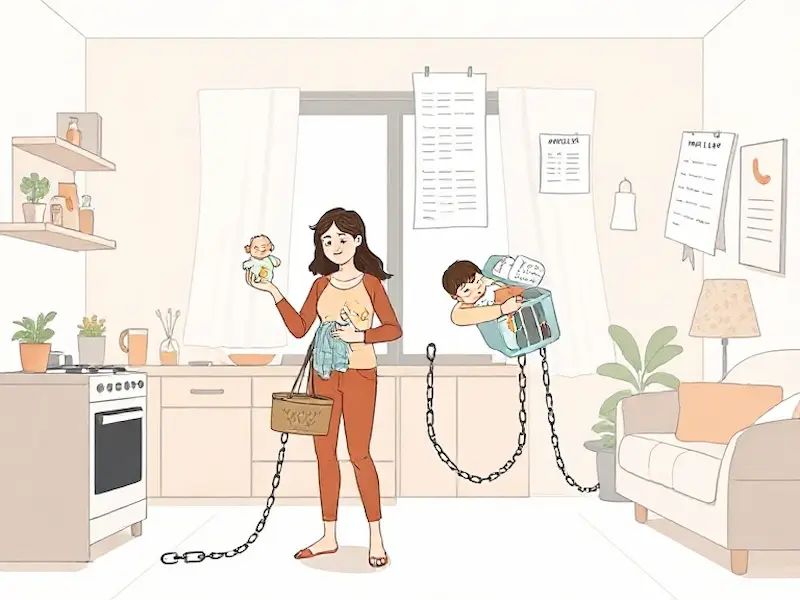
It doesn’t arrive with shouting. It doesn’t break the door. It settles—like dust. Quiet. Constant. Crushing.
This silent killer doesn’t wear the face of conflict. It wears the face of routine. It replaces intimacy with obligation. And love with logistics.
It’s not just about chores or money. It’s about the unequal distribution of emotional and mental labor—the kind that doesn’t show up on calendars, but weighs down the soul.
🕳️ How This Killer Moves
It doesn’t scream. It creaks—like a ceiling beam carrying too much weight.
One partner becomes the keeper of everything:
- Grocery lists
- Doctor appointments
- Birthdays
- Bills
- Emotional temperature of the household
This isn’t physical work. It’s mental load—the invisible architecture of a functioning relationship. And it’s exhausting.
🧨 Resentment in Silence
When one partner becomes the manager, they stop feeling like a lover. They start feeling like an assistant.
The relationship shifts from shared sanctuary to emotional office space. Love becomes transactional. Intimacy becomes optional. And slowly, the heart checks out—even if the body stays present.
You’re in the same room. But you’re no longer in the same rhythm.
🛠️ How to Lift the Invisible Load
You can’t fix this by splitting chores. You must see the unseen. And then, share the unseen.
🔍 1. Name the Weight: Awareness Is the First Repair
Mental load isn’t about doing. It’s about remembering, anticipating, planning.
Cooking isn’t just preparing food. It’s:
- Deciding what to eat
- Checking what’s in stock
- Buying ingredients
- Timing it with everyone’s schedule
The partner carrying this load must speak. And the other must learn to see what’s not visible.
This is not confrontation. It’s emotional inventory.
🧭 2. Share Domains, Not Just Tasks
To-do lists divide labor. But they don’t divide responsibility.
Instead of “You do this, I’ll do that,” try:
- “You own finances.”
- “I’ll own school and health.”
This isn’t delegation. It’s domain ownership—which equalizes the psychological weight.
Now both partners carry mental responsibility, not just physical effort.
🔄 3. Break the Boss-Employee Cycle: Be Proactive, Not Passive
When one partner keeps assigning tasks, the relationship starts to feel like a job. And love doesn’t thrive in hierarchy.
Instead:
- Notice what needs doing
- Act without being asked
- Anticipate instead of waiting
This is not about perfection. It’s about emotional initiative—the kind that says, “I see you. I’m with you.”
📚 What the Research Says
In Are You Carrying the Invisible Load in Your Relationship?4, researchers found that mental burden—not physical labor—is the root of resentment and emotional fatigue.
The takeaway: It’s not about how much you do. It’s about how much you carry—alone.
🌱 Final Truth
Lopsided duty doesn’t explode. It accumulates—like dust on a forgotten shelf.
It doesn’t break love. It buries it—under layers of unspoken exhaustion.
But the cure isn’t just redistribution. It’s recognition, ritual, and rhythm.
Because the strongest relationships aren’t the ones with perfect balance. They’re the ones where both partners say: “I see the weight you carry. Let me lift it with you.”
Conclusion
Long-lasting marriage is not about perfection, but basically, it is about awareness, effort, and teamwork. When you detect the 4 not so evident of marital life silent killers, you will not only be able to take a step to stop them but will also prevent these small cracks from turning into huge ones which are impossible to repair.
Don’t wait until the point of no return. In case of difficulties, it is always a good idea to get in touch with a professional for support. Just small actions like planning weekly date nights, daily sharing of appreciation, or having one candid conversation can become a source of new energy for your connection.
Worthy of getting the hardest efforts, your marriage is. Begin your journey of transformation today and bring that love story of yours a step closer to a tomorrow better than ever.
FAQs
Can Social Media Affect Marital Relationships?
Certainly. Overusing social media may lead to emotional distancing and trust issues. It takes away quality time and opens gates to unnecessary comparisons. One has to make sure they are setting up necessary limits.
What is the Role of Intimacy in Preventing Marriage Problems?
Intimacy—both physical and emotional—is the most powerful binding that makes couples inseparable. In the case of the dwindling of intimacy, separation is the most frequent sequel. The cohabitation of needs through open discussions is like a charm to the parties concerned.
How can couples still be individuals and at the same time not drift apart?
It is important to have a ‘balance’ in your relationship. Doing things together will keep you close, while having your own interests and friends will allow you to grow as individuals. Talking will make sure that being different does not mean having distance.
What is the effect of family interference in marriage?
While supportive families may be a great help, over-involvement is the main source of most problems in relationships. It is by having clear limits and being a couple that is strong against external issues that family problems will not affect your relationship.
How can couples rebuild trust after it has been broken?
To regain trust one has to spend a lot of time and be consistent and honest. Both partners are obliged to be frank, allow the required time for healing, and truly transform their behavior. A therapist can be very helpful in that process.