Table of Contents
Fellow workers, we should start by appreciating that the marital path is a conglomeration of two stories that unite to form one direction: a uniquely co-constructed project that evolves and changes in the long term. In such an enterprise, similarities–the shared traits–and differences–the disparate traits–act as complementary threads of the relationship fabric.
To maintain a healthy and fulfilling marriage, there is no choice but to consider these strands and incorporate them into the marriage, thus creating an ambiance of openness, mutual respect, and subtle understanding.
Admittedly, it is easy to think of the same components of marriage as the source of its satisfaction, and to consign the contrasting components to a secondary status. Such a reductionist view always, however, blots out the whole.
When both partners come to terms with, indeed to rejoice in, the entire range of their common and unique traits and qualities, then a complete appreciation of marriage is achieved–because it is this inbuilt tension that is the driving force behind the partnership ever upward to greater depth and life.
Therefore, the argument in this discussion focuses on the urgency of unconditional acceptance and provides workable tips on how to do it in one marriage.
Embracing Similarities: The Foundation of Ease and Connection in Relationships
In the fabric of a long-lasting marital relationship, the similarities are the virtually invisible threads that bind partners to each other. These standard features bring a tacit compatibility that brings about tranquility and understanding. Once a husband and wife admit and value these convergences deliberately and consciously, the emotional intensity of their relationship intensifies, thus facilitating increased satisfaction.
Understand the essence of similarities
It can be noted that they are experienced in various aspects of human life
- First, leisure activities are regularly shared, such as watching films of the same genres, matching their playlists, engaging in similar sports activities, or traveling with each other.
- Second, due to convergent values and ethical orientations, there is a shared worldview in matters of professional ambition, parenting philosophies, etc..
- Third, the couples often agree on the general aims in life, be it career paths, family goals, and long-term goals.
- Fourth, there is a shared cognitive style where the partners embrace similar problem-solving styles or have a similar sense of humor.
- And last but not least are common personality traits, e.g., introversion or extroversion, or a symbiotic calm personality, further cementing the partnership.
To conclude, similarities are inherent in the healthy operation of a marriage. When acknowledged and actively fostered, they foster emotional connection, reduce tension, and foster marital unity.
Benefits of Accepting Similarities:
Academically, when a partner’s preferences, their cognitive schemas, or what may be called life-values, are similar to those of the other, a sense of comfort and security is automatically created. This convergence acts as a comfort zone, which allows both individuals to express thoughts and feelings to the fullest without fear that the other party will not understand.
An example is that of two people who enjoy waking up early and having tea in a serene environment; it would become a routine in the morning and easily create harmony. At this point, no external pressure limits communication since both sides know the other’s point of view.
Another dynamic connected to this is that common interests and hobbies make it easy to connect. Passionate interests eliminate the need to go into details; both automatically understand the other person’s desires. When the two are committed to trekking, like in the case of the scenario mentioned above, the next vacation needs to be planned with little negotiation. The dividends in the form of the experience attained through the excursion are compounded.
Intimately related to this process is the ability to foster common dreams and aspirations. When life goals of a significant magnitude, like bringing up a family, advancing a career, or lifestyle choice, are in sync, parties become the chief advocates of one another. The similarity also provides mutual support to the partners, enabling them to act as a synchronized unit and inspiring one another to achieve common goals.
Lastly, the explicit recognition of shared experiences and related pleasures significantly increases relationship satisfaction. Positive experience is doubled: sharing good moments increases the affective value; being a fan of a favorite sports team, for example, creates cumulative connections and creates memories that last.
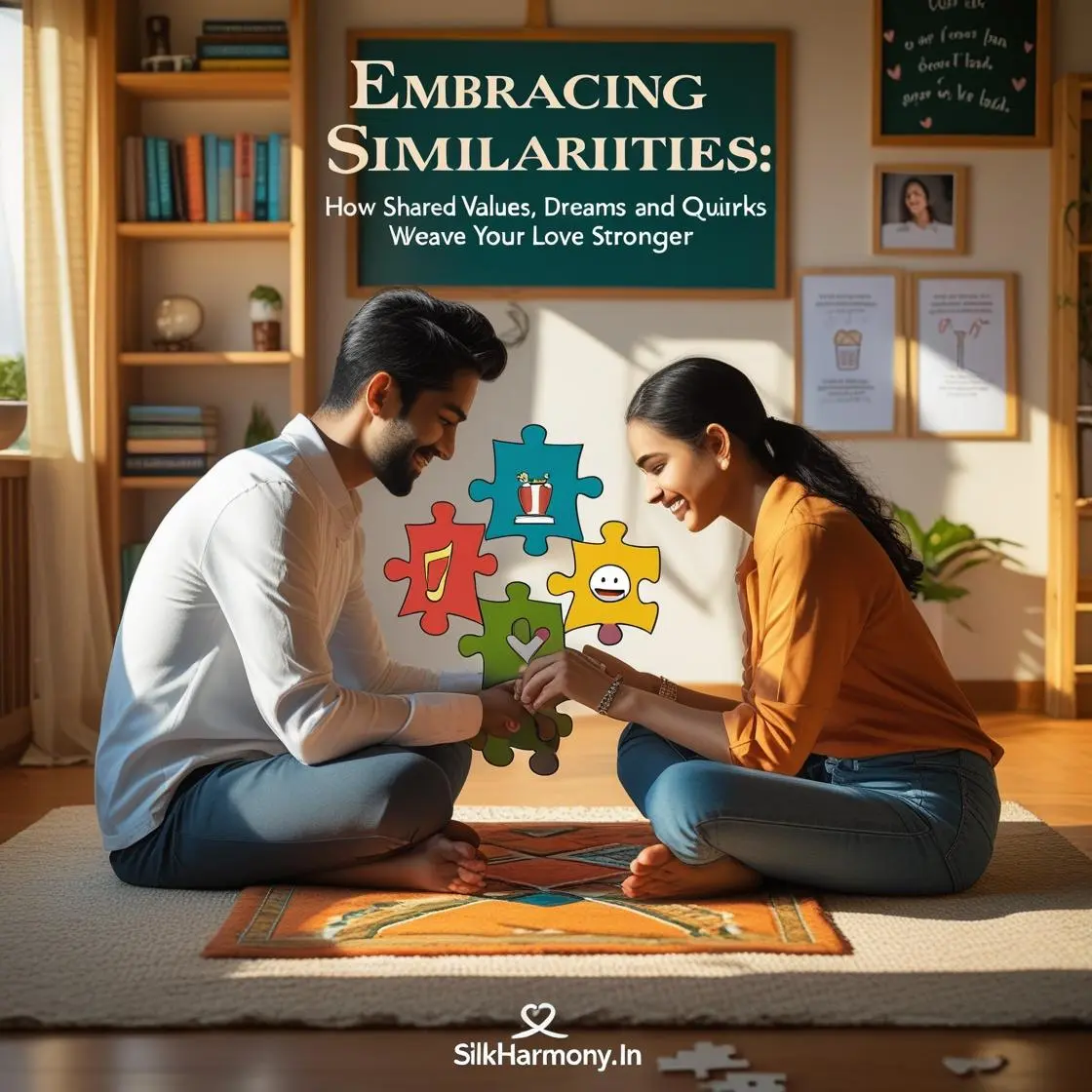
Overall, the academic discourse indicates that as long as the source of comfort and safety of a person is the compatibility of life-values, preferences, and cognitive frameworks with those of a partner, the intensity of interpersonal interaction and the quality of relationships are higher.
Accepting similarities builds a secure and comfortable base in the relationship, where love and understanding naturally grow. It reminds us that we are not alone, but have someone who feels similarly to us.
👀 Embracing Differences: The Path to Growth and Richness in Relationships
Despite the fact that similarities may give us a feeling of familiarity and comfort, the existence of differences provides a relationship with its most educative quality: depth, variety, and a touch of novelty.
These differences allow partners to break individual boundaries, venture into the unknown, and grow as individuals. Differences are not shortcomings, as they equip a relationship with its identity. With the recognition of these differences and acceptance of them, both partners will be able to thrive individually and collectively.
Why, then, do differences between husband and wife arise?
Four reasons are apparent
1. Individual Personal Makeup
Every Individual is a result of their individual history. There is a significant difference in personality, temperament, cognitive style, and emotional expression. One might also have a very composed demeanor and a lot of energy; one might prefer to plan to the nth degree, and the other might be very spontaneous. These are some of the characteristics that make up individual identity.
2. Childhood and Childhood Experiences
People are born into different families, cultural, and social environments. Personal development is achieved through childhood memories, values, traditions of the family, and life events that shape people, which therefore create divergences.
3. Passions and Interests
Throughout the life span, interests and predispositions change. It is not certain that what stimulates one person would have the same effect on another. And whereas one of the partners may take delight in reading, another in sport; one may love to travel, the other a home of modestly circumscribed domesticity.
4. The unending growth and change. Continuous growth and change
Human beings are dynamic as opposed to being static. Continuing education, experience, and personal growth always lead to new differentiation as time goes on.
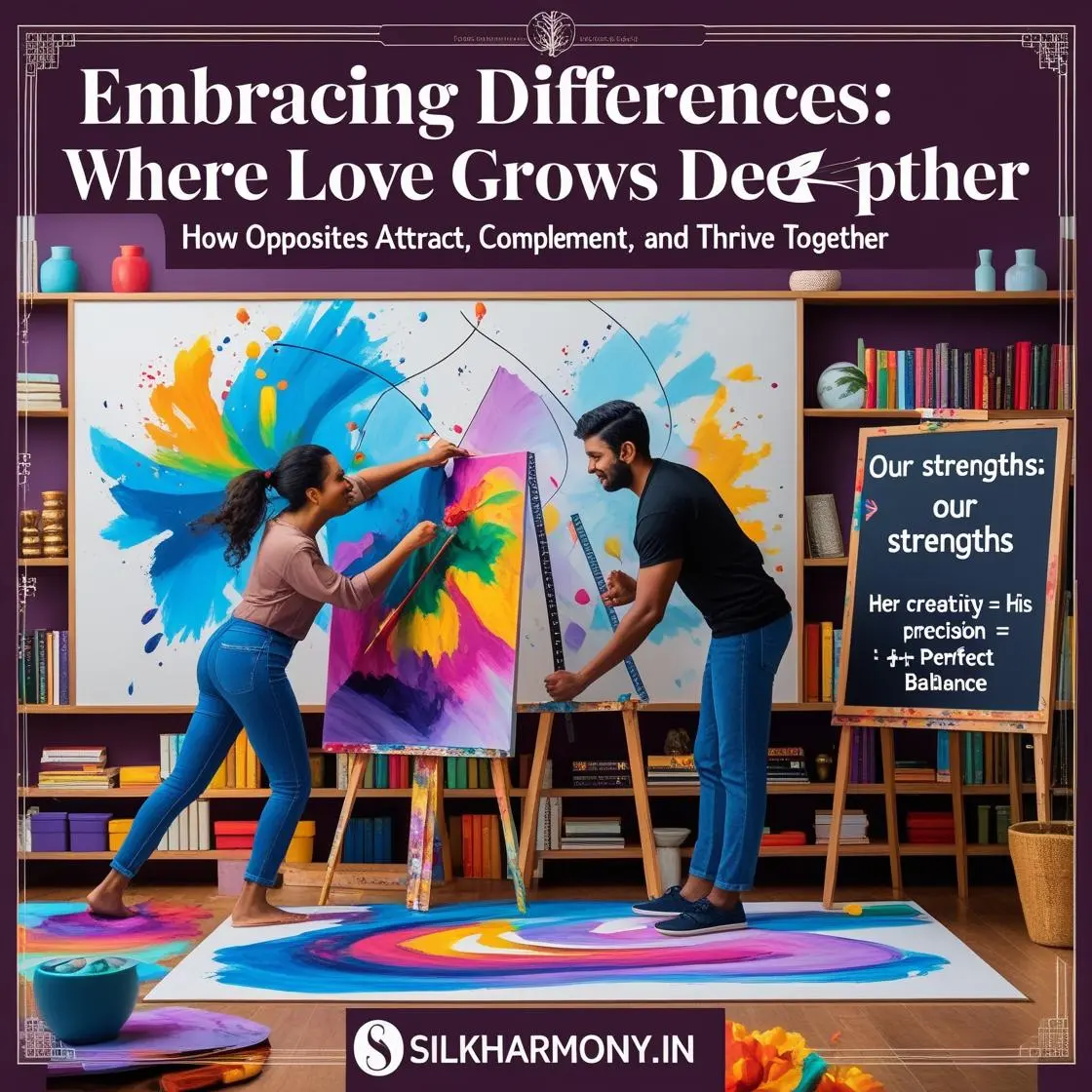
Overall, it is only with recognizing and appreciating these differences that a marriage can reach its most significant and positive development.
Benefits of Accepting Differences:
Academic studies repeatedly show that encounters with differences trigger individual development and expand horizons. The same can be said about interpersonal situations, e.g., people who associate with others who think differently or act differently gain new knowledge and views, thus broadening their mental horizons and allowing them to perceive reality using new perspectives.
The example of a couple with one member being very well organized and the other having a spontaneous orientation can give reciprocal benefits. The organized partner can enjoy the benefit of becoming episodically impulsive, and the spontaneous partner can internalize the need to be systematic. The result is a more integrated, compound identity of the two.
Moreover, the prolonged interaction with differences develops higher tolerance and flexibility. When a person lives next to a person whose value schema and practices do not harmonize with theirs, it will always reduce the anticipation of complete agreement. Such an altered position fosters resilience in diverse situations.
A good example is the couples brought up in different family backgrounds; here, the partners are trained to respect each other’s traditions and customs even when they are not in line with their cultural upbringing. This intercultural respect expands their understanding of the human condition and prepares them to enter the broader world.
Differences may also be used as complementary assets. Complementarity, in this case, is the process of canceling the advantages of one of the partners by the flaws of the other, which frequently affects marriage. Therefore, a thrifty husband or wife can interact harmoniously with a spendthrift spouse and produce a mutual financial plan that appeals to both. The restraint is balanced with the generosity, and decision-making effectiveness is increased.
Further, conflicting interests allow the introduction of newness and mental stimulation in a relationship, slowing down stagnation. When one person is a dedicated artist and the other a scientist, a shared pedagogical process will lead to enlarged areas of knowledge and long-lasting topics of conversation, which will avoid boredom and provide continuity to the relationship.
In short, embracing difference brings personal growth, increases tolerance and flexibility, engages complementary strengths, and develops relational vitality. Awareness of such benefits puts people in a position to enjoy the intellectual and affective enrichment that comes from an encounter with difference.
Accepting differences teaches us that love is not just about being similar, but also about respecting and learning from each other’s uniqueness. It makes the relationship a multi-dimensional experience.
The Art of Acceptance: Practical Ways to Cultivate It Between Husband and Wife
The ability of a couple to negotiate similarity and difference is an intellectual and practical skill set built up with time. The transformation of passive observation into active acceptance is accomplished by continuous effort and disciplined practice. It requires long-term and conscious involvement of both partners.
First of all, any further development is underwritten by effective communication. Correct listening and thoughtful self-expression are fundamental.
1. Open and frank Communication
The process of acceptance starts with the sharing of information. You must listen to your partner and state your opinions, which are the precursors.
- Active listening: Do not be tempted to cut in mid-sentence when your partner is talking. Instead, look at expressions and tone of voice, nodding where appropriate. At the end of their discussion, restate tripping it back to them: “So, you are saying that [this point] due to [this reason]?” This type of validation indicates understanding and will promote future openness.
- I Statements: Use the I constructions to express feelings, but not to blame. As part of the speaker experience frame, these statements are not a confrontation but a dialogue.
I can tell how you feel when you are late for this reason.
2. Respect and Appreciation of One Another
Frequent expressions of gratitude increase the bank of goodwill and the couple’s safety.
- Treating Qualities and Personality: Identify and label differences that act to differentiate your partner. “I like how you are organised; I can use your example.”
- Thankfulness of Little Things: Compliment the seemingly minor actions, such as visiting the neighbour, returning things forgotten, or an unsolicited display of affection. These banal activities that have been kept up over time form the bedrock of the liveliness and strength of the relationship.
Developing attentiveness, reciprocity, and gratitude allows couples to see, value, and confirm similarity and variation as they emerge.
3. Respecting Personal Space
Accepting that your partner needs their interests and time is essential to acceptance. Everyone needs some time and space to maintain their identity and recharge themselves.
- Understanding Individual Needs for Time and Interests: Give your partner time and support to pursue their hobbies.
- Example: If your partner enjoys painting, encourage them to join a course or provide a quiet space for painting.
- Encouraging Your Partner’s Hobbies: You respect their identity and want to see them happy.
4. Compromise and Flexibility
Acceptance does not mean always giving in, but understanding that it’s not always about having your way. Finding a middle ground where both needs are respected is the art of finding a middle ground.
- Finding a Middle Ground: Find acceptable solutions to both, considering both needs and desires.
- Example: If one likes mountains and the other likes the beach, go to the mountains once and the beach.
- Developing Adaptability: When looking at relational dynamics, it is discovered that the inclination towards sameness and difference can be intentionally nurtured instead of being a predetermined quality.
Such perspective acquisition does not happen overnight but is effective with continued mindfulness and disciplined training.
Finally, this developmental process requires people to be aware of each other and have a deliberate desire to interact with one another.

5. Growing Together
It is commonly depicted that shared experiences are crucibles of relationship building, whether or not there is initial divergence. Experiential interaction serves to strengthen ties in a relationship and develop new affiliations.
- Agreeing on Common Aims despite Differences: Agree on what you both want to achieve; make these common aims, even though you may pursue different means.
- Learning New Things Together: Do something even new to you both, something like a hobby, course (e.g. cooking or dance instruction), or exploring a new environment. These efforts improve the communication relationship and introduce new stimuli into the relational environment.
6. Unwavering Mutual Support
The most solid core of emotional resilience is a supportive relationship based on genuine interaction and non-judgmental acceptance. The development of such a dynamic creates the psychological security required to sustain intimacy.
It is essential to provide unconditional emotional support when one of the partners is facing an adversity. This is not just giving solutions; it is staying and listening and being physically close, with a warm embrace, a silent affirmation, and a reassuring silence.
At the same time, the ability to support the other in expressing and pursuing their aspirations, whether or not they coincide with the other person, indicates a deep regard for both the autonomy and self-development of the other person.
This positive attitude is strengthened by a culture of celebrating significant and minor achievements, open congratulations, low-key surprises, or common involvement with supportive others.
Benefits of Acceptance: The Outcome of a Strong and Happy Relationship
In my past investigation on the interaction between people, I have seen that when a man and a lady practice an attitude of receptivity to their common qualities and differences, their relationship becomes a cohabitational setup to a viable, enriching experience.
- First, an increased feeling of trust and safety is developed. The more the spouses respect each other due to the complementary traits and disparities, the more the whole relationship is strengthened regarding safety. Both partners will not be afraid to express their opinions without worrying that they will lose their love.
- Second, the elimination of extraneous conflict and accompanying stress ensues. The disagreement does not have to be the cause of acrimony. Instead, the differences are managed as unavoidable, and collective problem-solving is used instead of confrontation. The mood thereby gains a tangible calm.
- Third, the relational environment takes on the form of a constant driver of development. Acceptance promotes the ongoing mutual learning; one spouse serves as an example of behaviour that can be adopted by the other, and vice versa—such a positive loop results in personal and relationship development.
- Fourth, the level of love and respect is intensified with the recognition of individuality. Love and respect extend to the opposing dimensions that define the partner, as opposed to only the features that strike a chord with one’s identity.

Thus, the relationship between the two thereby obtains a unique, dynamic character. It is a unique something–pleasant in its harmonies and refreshing in its differences–and it grows stronger with age, strong in the very acceptance which is the basis of it.
Conclusion: Acceptance – The True Art of the Husband-Wife Relationship
The husband-wife relationship can be well described as a piece of art, the colours of which are made of the particularities of the partners, some liabilities that blend perfectly, others that contrast, that do not lose their original sparkles but are enriched in their hues and shades. This collaborative composition’s beauty depends on whether one is open and discerning to all the hues.
This acceptance, however, is not intellectual assent only; it is a practice that requires patience, empathy, and perseverance. When a husband and wife declare, to an equal degree, the similarities and the differences that punctuate their lives together, they develop a bond that is not just based on affection but on deep respect, insightful understanding, and enrichment of each other.
Understand, as well, that each couple has a unique relationship, characterized by ups and downs. However, when partners strive to know and accept each other by listening patiently, loving deeply, and knowing well, their bond will remain strong, happy, and full of life. This trip is not just the lightning of the other but a self-lightening. In this regard, acceptance is the final artistic pursuit of the husband-wife relationship.
Frequently Asked Questions (FAQs)
Q: Why should a couple accept both similarities and differences?
Accepting both similarities and differences builds a deeper, richer, and happier relationship by creating comfort from shared traits and growth from unique ones.
Q: 2. How do similarities benefit the relationship?
Similarities bring comfort, security, and effortless connection, making understanding easier and boosting shared joy and satisfaction.
Q: How do differences benefit the relationship?
Differences drive personal growth, new perspectives, and increased tolerance. They also add novelty and excitement, preventing stagnation.
Q: What’s the simplest way for couples to start practicing acceptance?
Start with open and honest communication, actively listening to each other and expressing feelings clearly. Also, respect each other’s personal space and appreciate their unique qualities.